

CFBC BOILERS
Circulating fluidized bed boilers for larger duties and harder fuels.
Above the size where a fluidized g bed makes sense, a circulating bed takes over: higher gas velocity, solids recycled through a cyclone, the whole furnace as a heat transfer surface, and the best sulphur capture of any solid fuel boiler.
REFORMED GAS IN up to 920°C
PROCESS GAS BOILER
STEAM 68 kg/cm²
CAPACITY up to 128 TPH

128 TPH
70 kg/cm²
284 °C steam
20+ installations
What it is
A circulating fluidised bed boiler runs at 840 to 900 °C like a fluidized bed, but at gas velocities of roughly 4 to 9 m/s that carry the bed material up through the furnace. A cyclone separates the solids and returns them to the base through a loop seal, so the fuel circulates many times and burns out completely. There are no tubes immersed in the bed; the membrane water walls and the convective pass do the work. Limestone in the circulating solids captures sulphur at high efficiency, and fuel flexibility extends to high-ash coal, lignite, petcoke, biomass and waste-derived fuels. The design is generally the economical choice above about 75 to 100 TPH of steam.
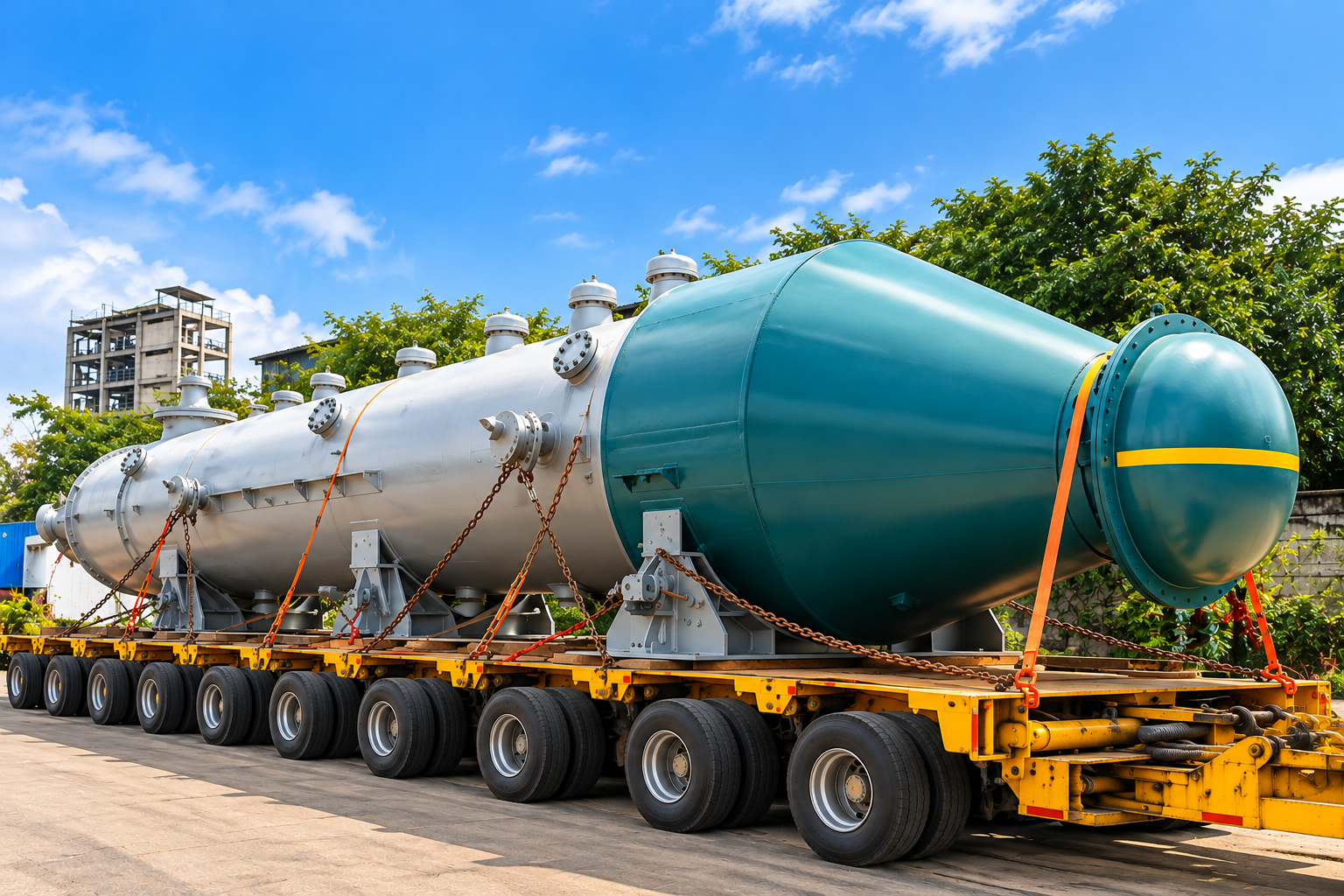
- Fire Tube design with(out) Hot / Cold Bypass
- Design consideration for high gas side operating pressure
- Single piece / extended ferrules
- Special consideration for Metal dusting issues
- GAPFREE WELDING to avoid CREVICE CORROSION

How we build it
- Membrane water-wall furnace; refractory-lined lower furnace and cyclone
- Cyclone and loop seal for solids recirculation; external heat exchanger option
- Limestone injection for in-situ sulphur capture; low-NOx staged combustion air
- Fuel preparation and feed for blended and low-grade fuels
- Economiser, air preheater and superheater in the convective pass
- Supplied standalone or as the boiler island of a captive power plant on EPC